Hotel & Hospitality Review Management: A Complete Playbook
How hotels, B&Bs, and hospitality businesses can leverage AI to manage guest reviews, improve ratings, and increase direct bookings.
The Hospitality Review Landscape in 2026
Hospitality is uniquely review-driven. A TripAdvisor study found that 81% of travelers always read reviews before booking a hotel. Google reviews have become the primary trust signal, surpassing OTA reviews because guests know they cannot be manipulated by the platform.
For hotels, each review impacts not just SEO but direct revenue. Properties with a stronger Google rating are better positioned to command higher room rates. More importantly, positive reviews drive direct bookings, which sidestep the commission OTAs like Booking.com and Expedia charge on every reservation they route to you.
The competitive landscape has shifted dramatically. Review counts across the industry have climbed for years, and properties that stopped actively collecting reviews a few years ago often look thin by comparison today. Boutique hotels and B&Bs with only a handful of reviews are easy for travelers to skip past in local search.
Google's AI Overview now surfaces hotel recommendations directly in search results, pulling from review content to generate summaries. Hotels with detailed, keyword-rich reviews are more likely to be featured in these AI-generated recommendations — making review quality as important as quantity.
The financial impact is measurable. A Cornell Hospitality Research study found that a one-point increase in a hotel's online reputation score (on a 5-point scale) allows the property to increase its price by 11.2% while maintaining the same occupancy rate — a well-managed review profile is a pricing lever, not just a vanity metric.
Review Collection Touchpoints and Conversion Rates
Hotels have multiple guest touchpoints ideal for review collection. The key is deploying the right channel at the right moment in the guest journey:
Pre-Departure (In-Stay) Touchpoints:
- In-room NFC tag (nightstand or TV remote card): Guests engage when relaxed in their room. Best for capturing positive mid-stay impressions.
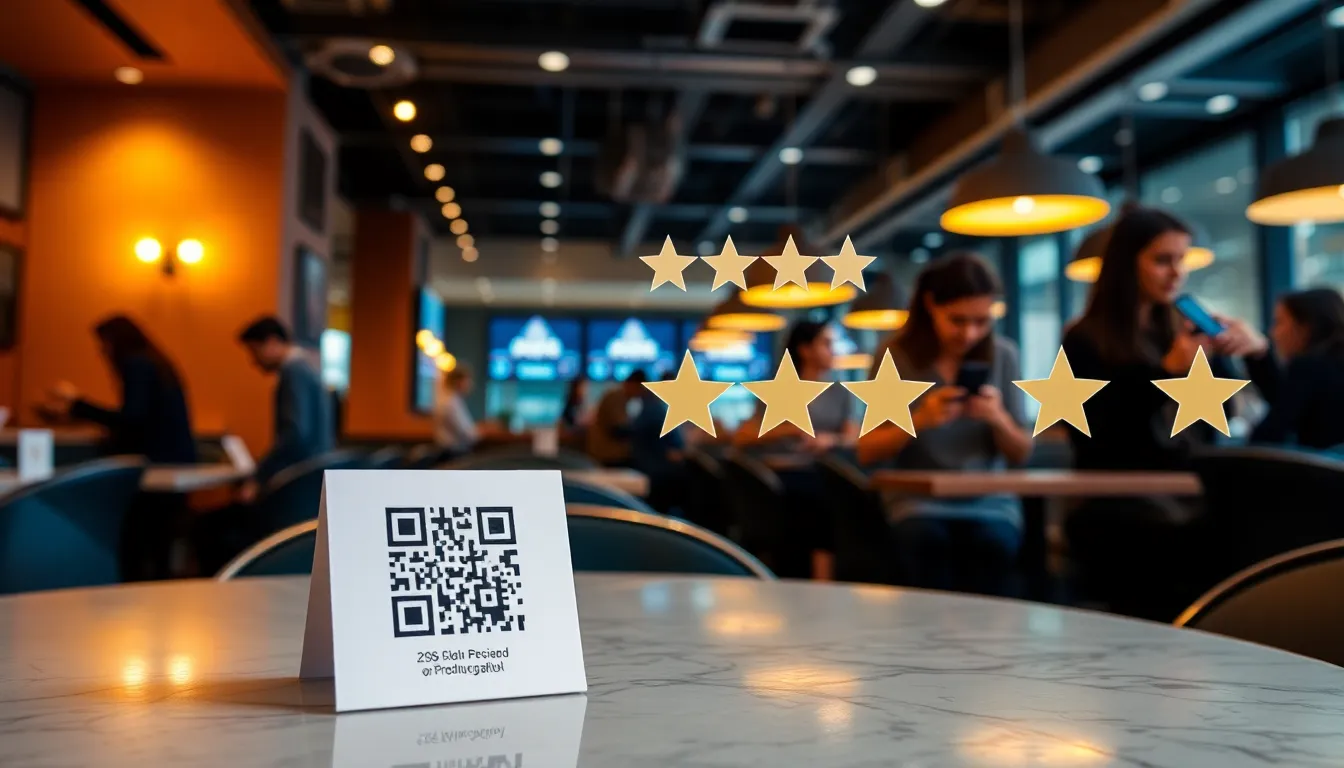
- Restaurant table tent: Works well for hotel restaurants where dining guests are already in a positive mindset.
- Wi-Fi landing page: Lower conversion but high volume — every guest connects to Wi-Fi.
- Spa/pool area signage: Guests at leisure amenities are relaxed and more willing to share feedback.
Checkout Touchpoints:
- Front desk QR code on receipt: Staff can verbally prompt guests while presenting the code.
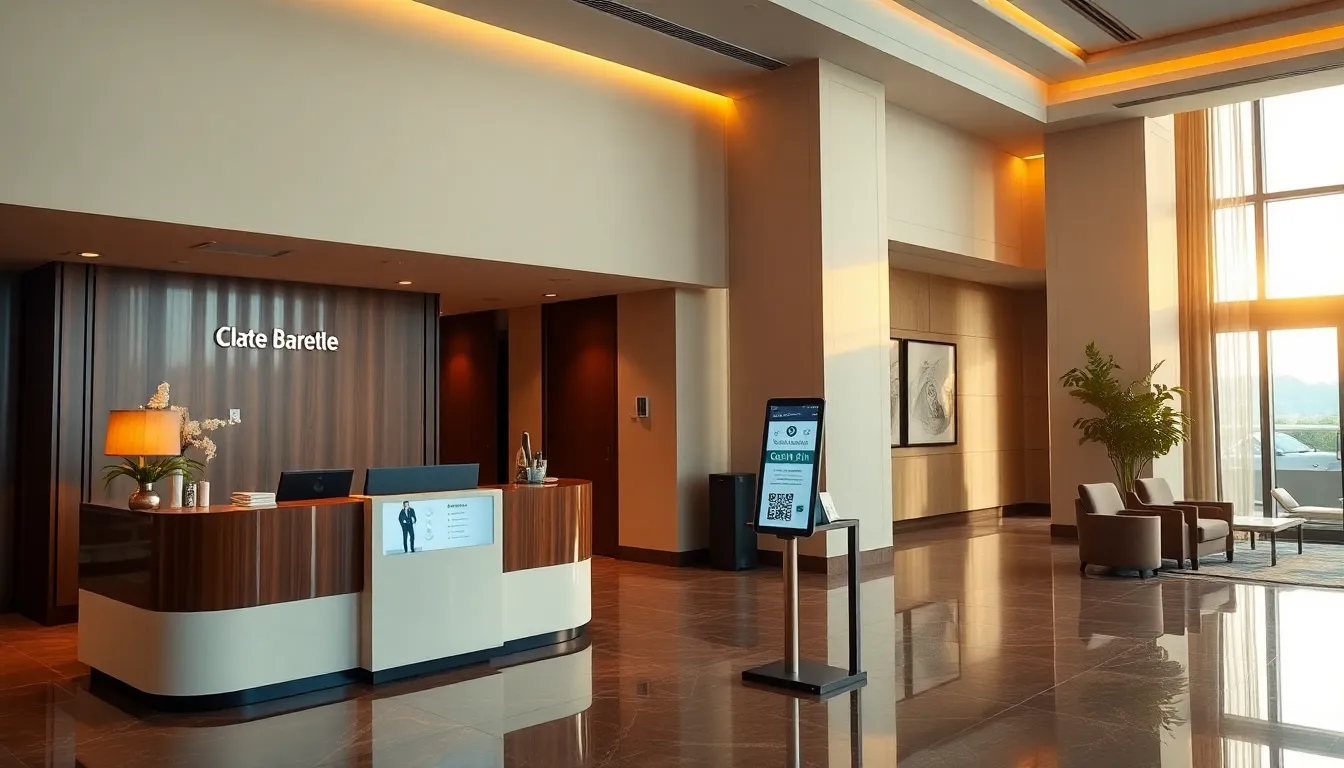
- Digital checkout kiosk: The digital flow naturally leads to a review prompt.
- Concierge farewell card: Personal touch from concierge with a handwritten "thank you" note containing a QR code — this tends to be one of the strongest in-person touchpoints.
Post-Stay Touchpoints:
- Automated email (2-4 hours after checkout): Often the highest-converting channel for hotels. The delay ensures the guest has left but the experience is still fresh.
- SMS follow-up (next day): Short, direct message with review link. Best for younger demographics.
- Loyalty program integration: Review prompt tied to loyalty points check-in.
The most effective strategy combines 2-3 touchpoints. Properties that combine an in-stay NFC tag with a post-checkout email tend to generate meaningfully more reviews than relying on email alone — the two touchpoints catch guests at different moments.
Critical timing insight: never ask for a review during check-in or within the first 4 hours of arrival. Guests are stressed from travel and haven't formed their impression yet. The sweet spot is after they've experienced at least one night and one breakfast.
Reducing OTA Dependency Through Reviews
For most hotels, OTA commissions represent one of the single largest distribution costs on every booking they route through the platform. A strong Google review profile directly reduces OTA dependency by driving direct bookings through Google Search and Maps.
Here is how the booking decision funnel works in 2026:
- Discovery: Guest searches "hotels near [destination]" on Google
- Evaluation: Google Maps shows the Local Pack with ratings and review counts
- Comparison: Guest reads Google reviews (not OTA reviews) for shortlisted properties
- Booking Decision: A guest satisfied with what they read on Google frequently checks the hotel's own website next, to see if booking direct gets them a better rate
- Conversion: A visible "best rate guarantee" on your website gives that visitor a concrete reason to book with you instead of going back to the OTA
Even a modest discount on direct bookings usually nets the hotel more per room-night than the OTA channel does, once the commission is factored out — and the guest relationship stays direct, enabling future re-marketing.
Strategies to maximize direct booking conversion from Google reviews:
- Mention your website in review responses: "Thank you for your stay! Did you know you can book directly at our website for exclusive perks?" Google does not penalize this.
- Respond with specific amenity highlights: When guests mention the pool or spa, your response reinforces those selling points for future readers.
- Feature review snippets on your booking page: Pull your best Google review quotes onto your direct booking engine.
- Use AI-generated responses that naturally weave in brand differentiators without sounding scripted.
Hotels that build a strong, well-maintained review profile tend to shift more reservations toward direct channels over time, reducing their reliance on OTA bookings.
Multi-Language Review Response for International Guests
Hotels serve guests from around the world, and reviews arrive in multiple languages. A European city hotel might receive reviews in English, German, French, Spanish, Chinese, Japanese, and Korean within a single week.
Responding in the reviewer's language is not just courteous — it directly impacts future bookings from that language market. A Japanese traveler searching for hotels in Paris is far more likely to book a property that has Japanese-language review responses.
Best practices for multi-language review management:
1. Always respond in the reviewer's language
Google Translate is not enough. Poorly translated responses can offend guests and damage your reputation in that market. AI review tools like OwnCrew Customer Ops generate native-quality responses in 6+ languages, understanding cultural nuances like honorifics in Japanese and Korean.
2. Prioritize languages by market value
Analyze your booking data to identify which language markets generate the most revenue. If 30% of your bookings come from Chinese-speaking travelers, Chinese review responses should be a top priority.
3. Include language-specific keywords
When responding in Chinese, naturally include terms like "交通方便" (convenient transportation) or "早餐豐富" (rich breakfast) that Chinese travelers commonly search for. This improves your visibility in Chinese-language Google searches.
4. Adapt tone to cultural expectations
- English: Warm, conversational, appreciative
- Japanese: Formal, humble, deeply grateful ("お忙しい中、貴重なご感想をいただき")
- Korean: Respectful, service-focused ("소중한 후기 감사합니다")
- Chinese: Professional, detail-oriented, emphasize value
- German: Direct, factual, solution-oriented
- French: Elegant, personal, relationship-building
5. Handle negative reviews in foreign languages with extra care
A negative review in Japanese requires a response that shows deep understanding of Japanese hospitality expectations (おもてなし). Generic apologies translated from English will feel hollow. AI tools trained on hospitality-specific language patterns produce significantly better outcomes.
AI-assisted multi-language responses can meaningfully cut response time across languages and help international guests feel heard, without needing a dedicated translator for every market.
Seasonal Review Strategy and Reputation Recovery
Hotels experience dramatic seasonal fluctuations that directly impact review patterns. Understanding these cycles is essential for maintaining consistent ratings year-round.
Peak Season Challenges:
During peak season, hotels often operate near full capacity. Common review pain points include:
- Longer wait times for check-in and room service
- Noise from full-capacity events and restaurants
- Overbooked amenities (pool, spa, gym)
- Higher rates drawing higher expectations
Countermeasures: Increase review collection efforts during peak season to capitalize on the higher guest volume. Use AI to respond to all reviews within 4 hours (vs. the standard 24-hour window). Address operational complaints in responses with specific actions taken.
Off-Season Opportunities:
Off-season presents a golden opportunity for reputation building:
- Lower occupancy = more personalized service = better reviews
- Staff has more time for proactive review collection
- Negative review recovery: follow up with dissatisfied peak-season guests
- Invest in staff training on review collection techniques
The 90-Day Reputation Recovery Plan:
If your hotel's rating has dropped below 4.0, follow this structured recovery:
Days 1-30: Foundation
- Audit all negative reviews from the past 6 months
- Categorize complaints by theme (service, cleanliness, amenities, value)
- Address the top 3 complaint themes operationally
- Set up automated post-checkout review collection via OwnCrew Customer Ops
- Respond to every unanswered review (past 3 months)
Days 31-60: Acceleration
- Deploy QR codes at all high-conversion touchpoints
- Train front desk and concierge on verbal review prompts
- Launch a guest satisfaction survey to catch issues before they become reviews
- Track your weekly review count so you can see whether the new touchpoints are actually moving the number
Days 61-90: Optimization
- Analyze sentiment word cloud data to track improvement
- A/B test different touchpoint placements
- Calculate your progress with our ROI Calculator
- Revisit your rating trend and keep addressing whatever complaint theme keeps recurring
Consistency is what makes this work — hotels that stick with the full 90-day cycle, rather than abandoning it after week 3, are the ones that see their rating actually move. The review flywheel only works when it keeps spinning.
References
- [1]Online Reviews Statistics and Trends — ReviewTrackers
- [2]Online Review Statistics — Podium
- [3]Hotel Industry Research — American Hotel & Lodging Association
- [4]Hotel Performance Data — STR
- [5]Google Business Profile Help: Reviews — Google
- [6]Google Business Profile: Edit Your Profile — Google
Know what needs attention.
OwnCrew Customer Ops brings customer feedback from every location into one place, shows you what keeps coming up, and tracks whether the fix worked.
Start 14-day free trial