Local SEO Ranking Factors 2026: How Google Reviews Impact Your Search Visibility
A data-driven breakdown of how review quantity, quality, recency, and response rate directly influence your Google Business ranking.
The Four Review Signals Google Cares About
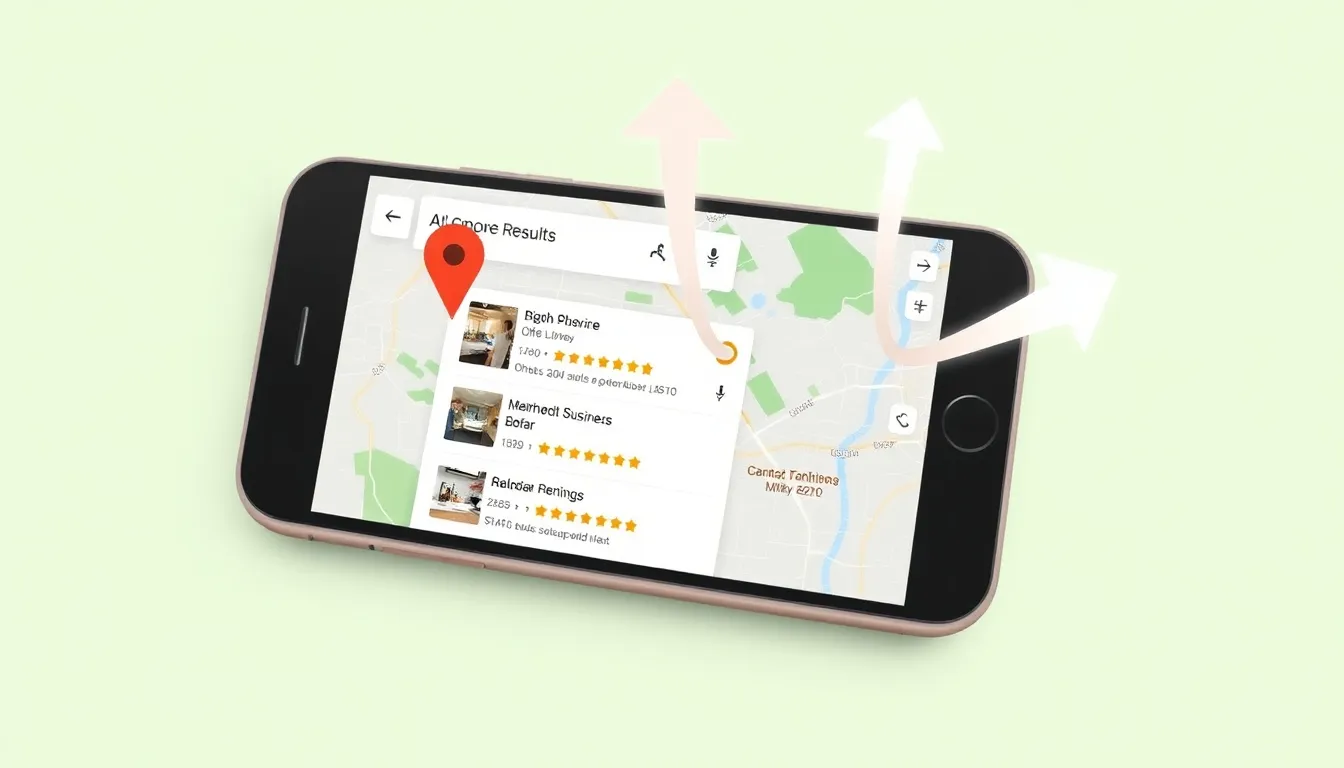
Google's local ranking algorithm weighs review signals heavily, even though Google has never published the exact weighting. Here are the four review-related factors that matter most:
1. Review Volume
Review volume matters relative to your competitive set rather than against a fixed number. Categories with heavier review activity overall — restaurants, hotels — typically need more volume to stand out than lower-volume categories like law firms or auto repair shops. Important nuance: volume alone does not guarantee ranking. Google evaluates volume relative to your competitive set. Having 200 reviews in a market where the average is 50 gives you a massive advantage. Having 200 reviews where competitors average 500 means you are behind.
2. Average Rating
A 4.0+ rating is generally the practical minimum for appearing in the top 3 map pack. Rating improvements do not have a linear effect — the impact depends on where you are starting from:
- 3.5 → 4.0: Massive impact (often the difference between page 2 and page 1)
- 4.0 → 4.3: Significant impact (enters the "trusted" zone)
- 4.3 → 4.6: Moderate impact (diminishing returns begin)
- 4.6 → 5.0: Minimal additional SEO benefit (though it still matters for conversion)
A perfect 5.0 can actually hurt credibility — consumers view it as suspicious. The perceived sweet spot is 4.5-4.8 stars.
3. Review Recency
Google prioritizes businesses with a steady stream of recent reviews. This is the most underrated ranking factor. A business that got 50 reviews in the past month ranks significantly better than one that got 200 reviews two years ago and none since.
The recency signal appears to operate on a rolling window, with more recent reviews carrying more weight than older ones — Google has not published the exact decay curve, but reviews from the past few weeks tend to matter more for this signal than reviews from months ago, and reviews older than about 90 days mainly contribute to volume rather than recency
Target: at least 5 new reviews per week for most businesses. High-competition categories (restaurants, hotels) should aim for 10-15.
4. Owner Response Rate and Speed
Responding to reviews signals active management. Google rewards this with higher visibility: a consistently high response rate signals active management, responding promptly reinforces that signal, and responding to negative reviews in particular is one of the clearest signs of active management Google can observe.
Use our ROI Calculator to see exactly how improving these four metrics would impact your bottom line.
Google AI Overview and GEO: The New Frontier
In 2026, Google's AI Overview (formerly SGE) has fundamentally changed how local businesses appear in search results. Instead of just showing the traditional 3-pack of map listings, Google now generates AI-powered summaries that synthesize information from reviews, business profiles, and web content.
This creates a new optimization discipline: Generative Engine Optimization (GEO). For local businesses, GEO means ensuring your review content is structured in ways that AI can easily parse and recommend.
How AI Overview Uses Review Data:
Synthesized Recommendations: Google AI reads hundreds of reviews and generates summaries like "Highly recommended for families with young children — reviewers frequently praise the kid-friendly menu and patient staff."
Attribute Extraction: AI extracts specific attributes from reviews (parking availability, noise level, accessibility, cuisine style) and uses them to match user intent.
Comparative Analysis: When users ask "best Italian restaurant near me vs. pizza place," AI compares review sentiment across businesses to generate a nuanced recommendation.
Question Answering: Queries like "Does [restaurant] have outdoor seating?" are answered directly from review content, bypassing the business profile entirely.
Optimizing Reviews for GEO:
Reviews that use specific, descriptive language extract into AI Overview better than vague ones:
- Entity-rich content: Reviews that mention specific dishes, room types, treatments, or services provide more data for AI extraction.
- Natural language detail: "The rooftop pool has stunning views of the harbor" is more GEO-valuable than "Great pool."
- Prompt customers to be specific: A simple prompt at the point of asking for a review ("What did you enjoy most?") tends to produce more detailed, GEO-friendly reviews than a generic star-rating request.
Response Optimization for GEO:
Your review responses also feed into AI Overview. Optimize them by:
- Confirming factual details mentioned in reviews ("Yes, we do offer complimentary breakfast from 7-10am")
- Adding context the reviewer did not mention ("We also have a private dining room perfect for groups of 8-12")
- Using natural, conversational language (AI penalizes templated responses)
For a deep dive into GEO strategy, see our comprehensive Generative Engine Optimization guide.
Technical SEO Checklist for Review-Powered Local Rankings
Beyond review management, there are technical SEO factors that amplify the impact of your reviews on local rankings. Here is the complete checklist:
Google Business Profile Optimization:
- Primary category set correctly (the single most important GBP field)
- Secondary categories added (up to 9 additional categories)
- Business description includes target keywords naturally
- All attributes filled in (payment methods, accessibility, amenities)
- Service area or location pin accurately set
- Business hours accurate (including special hours for holidays)
- Photos updated monthly (fresh photos are an under-used profile-freshness signal)
- Google Posts published weekly (maintains profile freshness signal)
- Q&A section seeded with common questions and answers
- Products/services catalog populated with descriptions
See our detailed GBP optimization guide for implementation details.
Schema Markup for Reviews:
Implement LocalBusiness schema with AggregateRating on your website. This enables rich snippets showing your star rating directly in organic search results:
{
  "@type": "LocalBusiness",
  "name": "Your Business Name",
  "aggregateRating": {
    "@type": "AggregateRating",
    "ratingValue": "4.7",
    "reviewCount": "342"
  }
}
Learn more about schema implementation in our local business schema markup guide.
Citation Consistency:
Your business name, address, and phone number (NAP) must be identical across all platforms:
- Google Business Profile
- Yelp, TripAdvisor, industry-specific directories
- Your website contact page
- Social media profiles
- Local chamber of commerce listings
Inconsistent NAP data confuses Google and dilutes your local ranking signals. Audit your citations quarterly. See our citation building guide for the full process.
Website Technical Factors:
- Mobile-first design (most local searches happen on mobile)
- Page load under 2.5 seconds (Core Web Vital: LCP)
- HTTPS enabled
- Location pages for each business location
- Embedded Google Maps on contact page
- Review testimonials on key landing pages (with schema markup)
- Blog content targeting local keywords + review-related queries
Voice Search Optimization:
As voice assistants become a more common way people search locally, ensure your content answers natural language queries. Optimize for phrases like "best [business type] near me" and "where can I find [service] with good reviews." See our voice search optimization guide for more strategies.
Completing this checklist alongside a strong review management strategy using OwnCrew Customer Ops creates a compounding effect where technical SEO and review signals reinforce each other — the foundation for long-term local search dominance.
References
- [1]Local Search Ranking Factors — Moz
- [2]Local Consumer Review Survey — BrightLocal
- [3]Online Reviews Statistics and Trends — ReviewTrackers
- [4]Online Review Statistics — Podium
- [5]Google Business Profile Help: Reviews — Google
- [6]Google Business Profile: Edit Your Profile — Google
Know what needs attention.
OwnCrew Customer Ops brings customer feedback from every location into one place, shows you what keeps coming up, and tracks whether the fix worked.
Start 14-day free trial